
Risk-Based Cybersecurity Frameworks for FDA Compliance
Post Summary
Medical device cybersecurity is now a regulatory requirement. With the FDA's updated guidance and Section 524B of the FD&C Act, manufacturers must ensure devices are secure throughout their lifecycle. This includes premarket design, risk management, and postmarket monitoring.
Three frameworks help meet these requirements:
- NIST Cybersecurity Framework (CSF): Focuses on risk management across five functions - Identify, Protect, Detect, Respond, Recover.
- ISO 13485:2016: Embeds cybersecurity into quality management systems, now adopted by the FDA as the standard for medical device quality.
- Secure Product Development Framework (SPDF): Tailored for medical devices, addressing technical cybersecurity risks and FDA submission requirements.
Each framework serves a specific purpose, and combining them can streamline compliance. Tools like Censinet RiskOps™ simplify implementation by automating tasks like risk assessments and vulnerability management. Cybersecurity is no longer optional; it’s a core part of ensuring patient safety and meeting FDA standards.
How to satisfy Cybersecurity for FDA and EU?
sbb-itb-535baee
1. NIST Cybersecurity Framework (CSF)
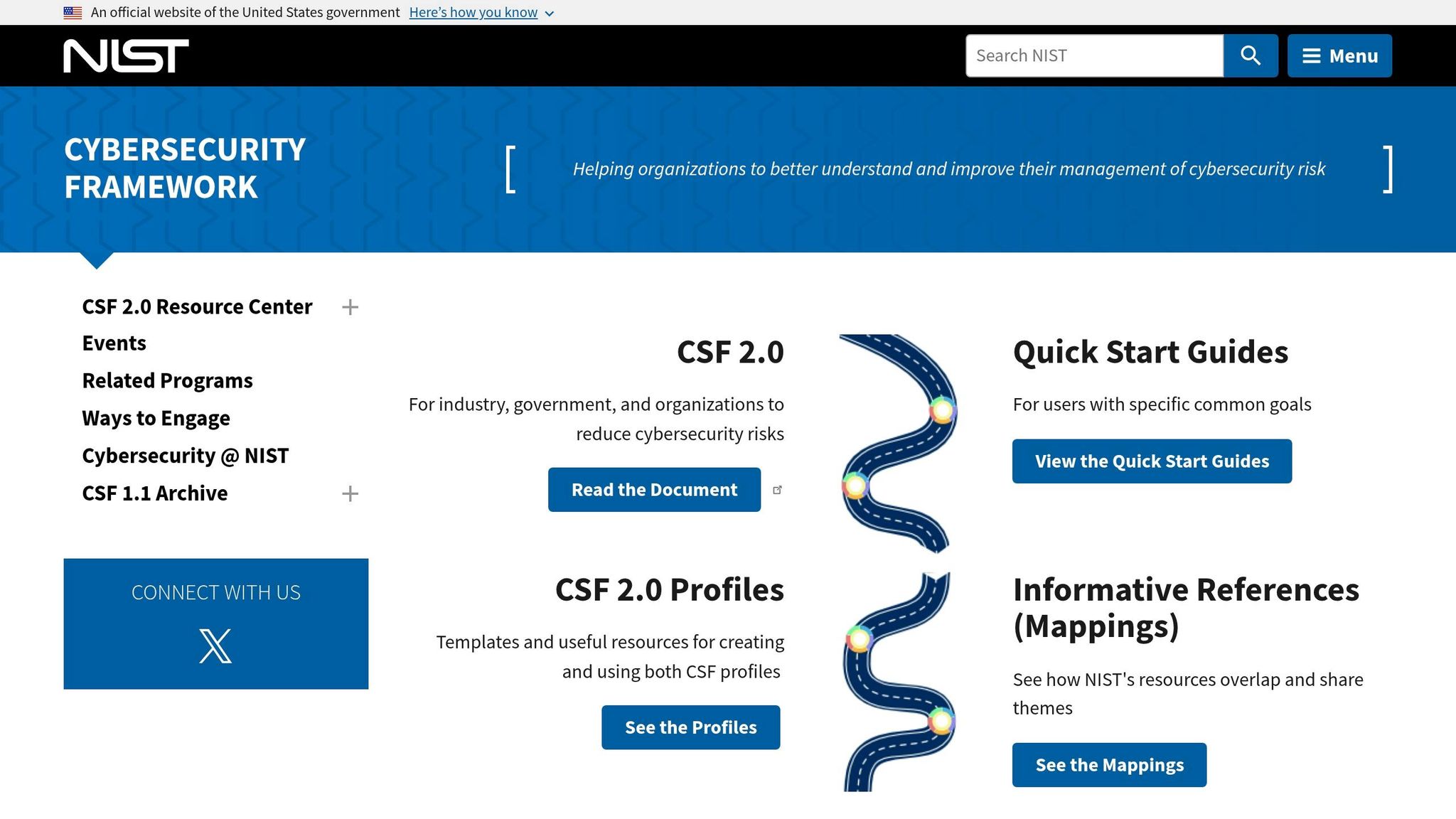
The NIST Cybersecurity Framework organizes security efforts into five essential functions: Identify, Protect, Detect, Respond, and Recover. These functions align with FDA requirements for both premarket submissions and postmarket monitoring. The FDA's Secure Product Development Framework (SPDF) is built around these same principles, providing a way to demonstrate that a device is "secure by design" [4].
Risk Assessment Focus
The Identify and Protect functions set the stage for meeting the FDA's risk assessment requirements during the design and development phases. Manufacturers are expected to document the identification of assets, threats, and vulnerabilities within their Quality Management System (QMS), following the guidelines of 21 CFR Part 820. This documentation forms the basis of a detailed Cybersecurity Risk Management Report, which is critical for premarket submissions [4].
Aligning with FDA Submissions
FDA guidance (FDA-2021-D-1158) requires manufacturers to structure their premarket submissions around the five NIST CSF functions. Each function - ranging from identifying threats to planning recovery - must be addressed to meet the requirements of Section 524B of the FD&C Act [4].
Coverage Across the Product Lifecycle
The NIST CSF spans the entire product lifecycle. During the premarket phase, Identify and Protect guide secure design efforts. In the postmarket phase, Detect, Respond, and Recover ensure effective surveillance and management of vulnerabilities [4]. This lifecycle approach underscores the importance of implementing the framework across all phases of product development and maintenance.
Key Steps for Implementation
Before integrating the framework, manufacturers need to confirm whether their product qualifies as a "cyber device" under Section 524B. Once confirmed, the framework should be embedded into the existing QMS. This includes preparing documentation for premarket submissions and establishing a strong postmarket vulnerability management plan [4].
2. ISO 13485:2016 Risk Management Framework
ISO 13485:2016 officially became the FDA's Quality Management System (QMS) standard on February 2, 2026, replacing the longstanding 21 CFR Part 820 [5][3].
"The requirements in ISO 13485 are, when taken in totality, which align closely with QS regulation requirements." - FDA [5]
Risk Assessment Depth
Under ISO 13485, cybersecurity is treated as an integral part of quality management, going far beyond basic vulnerability scans. The standard requires a thorough risk assessment process, where manufacturers evaluate the likelihood of potential enterprise risks, the impact on device performance, and the severity of potential harm to patients [5]. Cybersecurity artifacts like threat models and the Software Bill of Materials (SBOM) must be incorporated into the QMS itself, rather than being stored as separate technical documents [3]. This ensures that cybersecurity is directly linked to both patient safety and regulatory compliance [3].
FDA Submission Alignment
Several key clauses in ISO 13485 directly support compliance with FDA requirements:
- Clause 7.1: Focuses on integrating risk management into the QMS.
- Clause 7.3.7: Requires design validation, including security testing.
- Clause 8.4: Emphasizes the need for analyzing vulnerability trends.
- Clause 8.5: Links Corrective and Preventive Actions (CAPA) to security-related events [3].
Since the QMSR now incorporates ISO 13485, documentation developed for ISO compliance also meets FDA's QMS expectations [5]. These clauses collectively ensure that cybersecurity considerations are embedded throughout the product lifecycle.
Lifecycle Coverage
The ISO 13485 framework addresses cybersecurity risks across the entire product lifecycle [5]. Manufacturers are required to monitor signals from internal systems, postmarket data, and external sources. They must also differentiate routine software updates from critical remediations, as outlined in 21 CFR Part 806 [5].
Implementation Prerequisites
To implement the framework effectively, manufacturers need to document a formal risk management process that complies with Subclause 7.1. For software-based devices, Clause 7.3 and 21 CFR 820.10(c) mandate the inclusion of cybersecurity design inputs - such as asset identification, threat modeling, and vulnerability management - within software validation activities [6]. Additionally, FDA inspections now follow the updated "Inspection of Medical Device Manufacturers Compliance Program: 7382.850", which replaced the older Quality System Inspection Technique (QSIT) as of February 2026 [6].
3. Secure Product Development Framework (SPDF)
The SPDF weaves cybersecurity into every phase of product development, aligning with the FDA's Quality Management System Regulation (QMSR). As of February 2026, the FDA's Premarket Cybersecurity Guidance highlights the SPDF as a recommended method for meeting QMSR requirements [9]. This framework ensures cybersecurity is a core focus throughout the development lifecycle.
"An SPDF is a set of processes that reduces the number and severity of vulnerabilities in products throughout the device lifecycle." – FDA Guidance Document [9]
Risk Assessment Depth
The SPDF treats cybersecurity risks with the same level of scrutiny as patient safety risks. It combines the CVSS scoring system with ISO 14971's patient harm analysis to evaluate risks comprehensively [7][8]. Tools like threat modeling (e.g., STRIDE) and diagrammatic risk analysis (such as Data Flow Diagrams or DFDs) are used to pinpoint vulnerabilities and assess their clinical impact, especially at trust boundaries [8][9].
As ELTON Cyber puts it:
"The question is no longer, 'Do you know every vulnerability in your product?' It is, 'If one appeared tomorrow in this part of the system, do you already know how it would be rated - and can you defend why?'" [7]
These practices ensure thorough documentation for premarket submissions, fully aligning with the requirements of Section 524B.
FDA Submission Alignment
Adopting an SPDF helps generate the outputs required for premarket submissions under Section 524B [9][3]. These outputs include threat models, Software Bills of Materials (SBOMs), security architecture views, and vulnerability management plans, all aligned with the FDA's eSTAR terminology and supported by automated vendor risk assessment solutions [3][11]. The framework also requires at least four architectural views - Global System View, Multi-Patient Harm View, Updatability/Patchability View, and Security Use Case View - to address device cybersecurity comprehensively [9][10]. Section 524B further specifies that failing to develop processes ensuring reasonable cybersecurity constitutes a prohibited act under section 301(q) of the FD&C Act [9][3].
Lifecycle Coverage
The SPDF spans three critical phases: Design & Architecture, Implementation & Verification, and Release & Maintenance [7][8][9]. From the initial design to post-market monitoring, the framework ensures security is built in and continuously maintained. Documentation remains traceable throughout the device's lifecycle, supporting ongoing compliance [7][8]. To date, SPDF-aligned processes have supported more than 600 FDA-approved submissions [7].
Implementation Prerequisites
To implement the SPDF, integrate it into your Quality Management System (QMS) and Software Development Life Cycle (SDLC) [8]. This framework isn't a simple checklist - it requires a shift in mindset, where security becomes a shared responsibility across all engineering teams [8]. Incorporate tools like automated SBOM generation and vulnerability scanning directly into your CI/CD pipeline.
It's worth noting that, as of October 1, 2023, the FDA has started issuing Refuse to Accept (RTA) letters for submissions that fail to meet basic cybersecurity requirements [12]. The SPDF is built on widely accepted standards, such as IEC 81001-5-1 and ANSI/AAMI SW96:2023 [11].
This structured approach ensures a comprehensive evaluation of each framework's role in FDA compliance.
Framework Strengths and Weaknesses

FDA Compliance Frameworks Comparison: NIST CSF vs ISO 13485 vs SPDF for Medical Devices
When it comes to FDA compliance for medical devices, each framework offers its own set of strengths and challenges. Understanding these trade-offs is crucial for manufacturers to select the best approach - or combination of approaches - that aligns with their regulatory needs. Here's a closer look at the unique features of each framework.
ISO 13485:2016 serves as the essential foundation for quality systems. Starting February 2026, the FDA's Quality Management System Regulation (QMSR) will officially incorporate ISO 13485:2016, making it the baseline requirement for medical device quality systems in the U.S. [3][5]. This framework focuses on defining what needs to be achieved but leaves the how to other frameworks. Its strength lies in creating a globally harmonized standard, but it lacks specific guidance on cybersecurity.
NIST CSF shines in operational security and incident response. Its five core functions - Identify, Protect, Detect, Respond, and Recover - offer a complete lifecycle approach, making it especially useful for postmarket monitoring and infrastructure security [5]. The FDA recommends it for these purposes. However, since it’s a general framework, it doesn’t specifically address medical device design controls, requiring extra effort to map it to FDA compliance requirements [5].
SPDF directly addresses technical requirements for medical devices, particularly those classified as "cyber devices" under Section 524B of the FD&C Act. It produces the seven core artifacts FDA reviewers expect, including threat models, risk analyses, security architectures, traceability matrices, test reports, SBOMs (Software Bill of Materials), and postmarket plans. Maven Regulatory Solutions highlights its importance:
"Cybersecurity is no longer a standalone technical consideration - it is embedded into Risk Management, Design Controls, Validation Activities, and Postmarket Surveillance" [3].
However, SPDF’s main drawback is the significant upfront effort it demands, as well as the cultural adjustments needed to integrate it effectively [8].
Here’s a quick comparison of the frameworks:
| Framework | Primary Strength | Primary Weakness | FDA Compliance Role |
|---|---|---|---|
| ISO 13485:2016 | Essential QMS foundation; globally recognized standard [3][5] | Focuses on high-level processes; lacks detailed cybersecurity guidance [2] | Incorporated into QMSR (21 CFR 820); mandatory for all devices [5] |
| NIST CSF | Strong in operational security and incident response [5] | General framework; not specific to medical device design [5] | Recommended for postmarket and infrastructure security [5] |
| SPDF | Tailored to device lifecycle; meets Section 524B requirements [3][2] | High initial investment and cultural adjustment required [8] | Key for meeting QMSR cybersecurity requirements [2] |
Many manufacturers find that combining these frameworks works best. ISO 13485 provides the structural backbone for quality systems, SPDF ensures technical compliance for cybersecurity, and NIST CSF supports ongoing operational and postmarket activities. Together, they form a comprehensive strategy for FDA compliance, paving the way for implementation through tools like Censinet RiskOps™.
Using Censinet RiskOps™ to Implement These Frameworks
Turning theory into practice is essential for meeting FDA compliance requirements in medical device cybersecurity. By leveraging the strengths of established frameworks, Censinet RiskOps™ offers practical solutions that align with FDA standards. The platform integrates the requirements of NIST CSF, ISO 13485, and SPDF, automating tasks like vendor assessments, threat modeling, and benchmarking to simplify the compliance process.
Automated third-party risk assessments play a crucial role in securing supply chains, a key focus of both the NIST CSF and FDA's Section 524B. For instance, consider a 300-bed hospital managing IoT-enabled infusion pumps, which often make up 5–11% of hospital endpoints. Using SBOM data and a vulnerability history, Censinet RiskOps™ automates firmware assessments, identifying risks such as unpatched components that could disrupt device functionality or allow lateral network movement [1]. The platform also standardizes assessments and evaluations, providing a clear view of supply chain vulnerabilities [1].
AI-driven threat modeling bridges the gap between technical risks and patient safety. By simulating potential attack scenarios - like unauthorized parameter changes or root access - the platform prioritizes risks based on their clinical impact [13]. This approach aligns with ISO 13485:2016 standards for software validation and risk management, producing the threat models and risk analyses FDA reviewers look for in premarket submissions. Phil Englert from Health-ISAC has highlighted the importance of connecting technical risks to clinical outcomes, a challenge that RiskOps™ addresses through collaborative tools and network segmentation insights [1].
Cybersecurity benchmarking measures device security against industry standards and FDA expectations. Metrics such as patch management, access controls, update capabilities, and vulnerability resolution times are key for demonstrating SPDF's secure-by-design principles. For example, benchmarking a diagnostic imaging system against Section 524B standards can guide procurement decisions and reveal gaps in SBOM transparency. These dashboards also support SPDF's seven core artifacts, including traceability matrices and postmarket surveillance plans. This benchmarking process strengthens continuous monitoring and postmarket preparedness.
Collaboration is at the heart of the platform, enabling healthcare organizations and medical device vendors to work together toward FDA compliance. With hospitals generating about 1.37 terabytes of data daily - much of it from medical devices - Censinet RiskOps™ ensures that this data remains secure and accessible throughout its lifecycle [1]. By doing so, the platform minimizes the need for expensive redesigns while supporting the continuous monitoring and incident response capabilities emphasized by the NIST CSF for postmarket surveillance.
Conclusion
Meeting FDA compliance standards for medical devices requires a well-thought-out cybersecurity strategy. The NIST Cybersecurity Framework (CSF) provides a broad, adaptable approach to risk management with its five core functions. Meanwhile, ISO 13485:2016 embeds risk management directly into quality systems through Subclauses 7.1 and 7.3.7, aligning with the FDA's updated Part 820 requirements for software validation and threat modeling [13][15]. Additionally, the Secure Product Development Framework (SPDF) ensures that devices are designed with security in mind from the outset, rather than relying on fixes after development [16].
Choosing the right framework depends on your device's lifecycle stage and your organization's capabilities. For premarket security documentation, SPDF is ideal. For comprehensive risk management, NIST CSF is a strong choice, while ISO 13485:2016 integrates smoothly into existing quality management systems. Large healthcare enterprises often benefit from NIST's extensive risk monitoring, while organizations with established QMS processes may find ISO 13485:2016 a better fit. In many cases, a hybrid approach works best, especially for high-risk devices regulated under Section 524B. Combining NIST's risk visibility, ISO 13485:2016's QMS integration, and SPDF's developmental rigor can provide a balanced and effective strategy [14][15].
Practical implementation involves activities like threat modeling, developing a Software Bill of Materials (SBOM), conducting penetration tests, and employing strong network segmentation controls [1][13]. These are not one-and-done tasks. The FDA's 2026 guidance highlights the importance of continuous postmarket surveillance and regular patch management to address evolving cyber threats [1][13]. As Phil Englert from Health-ISAC points out, devices must be adaptable to remain secure in environments that produce an average of 1.37 terabytes of data daily [1].
For organizations looking to simplify this process, tools like Censinet RiskOps™ can make a significant difference. This platform helps healthcare providers and medical device manufacturers streamline compliance by automating third-party risk assessments, managing SBOM data, and offering cybersecurity benchmarking aligned with FDA standards. Solutions like these enable manufacturers to meet regulatory requirements efficiently while prioritizing patient safety.
FAQs
Do I need all three frameworks, or just one?
You usually only need to follow one risk-based cybersecurity framework at a time. That said, blending different frameworks - such as FDA guidance, ISO standards, and your organization's internal controls - can strengthen your cybersecurity approach and better align it with FDA compliance requirements.
What counts as a “cyber device” under Section 524B?
A "cyber device", as defined in Section 524B, refers to any medical device that connects to the internet, relies on software, or has potential cybersecurity vulnerabilities. To ensure their safety and performance, these devices must comply with FDA cybersecurity standards throughout both the premarket and postmarket stages.
What evidence does the FDA expect in a premarket submission?
The FDA requires premarket submissions to contain several key elements related to cybersecurity. These include:
- Cybersecurity design considerations: Details on how cybersecurity is integrated into the device's design.
- Risk management reports: Documentation outlining identified risks and the strategies to address them.
- Software Bill of Materials (SBOM): A comprehensive list of software components used, including third-party and open-source elements.
- Detailed architecture views: Clear diagrams and descriptions of the device's architecture to show how components interact.
- Threat modeling and vulnerability testing: Evidence of assessing potential threats and testing for vulnerabilities.
- Risk mitigation documentation: Steps taken to minimize identified risks.
These components are crucial for meeting FDA guidelines and ensuring cybersecurity is prioritized throughout the device's development process.

